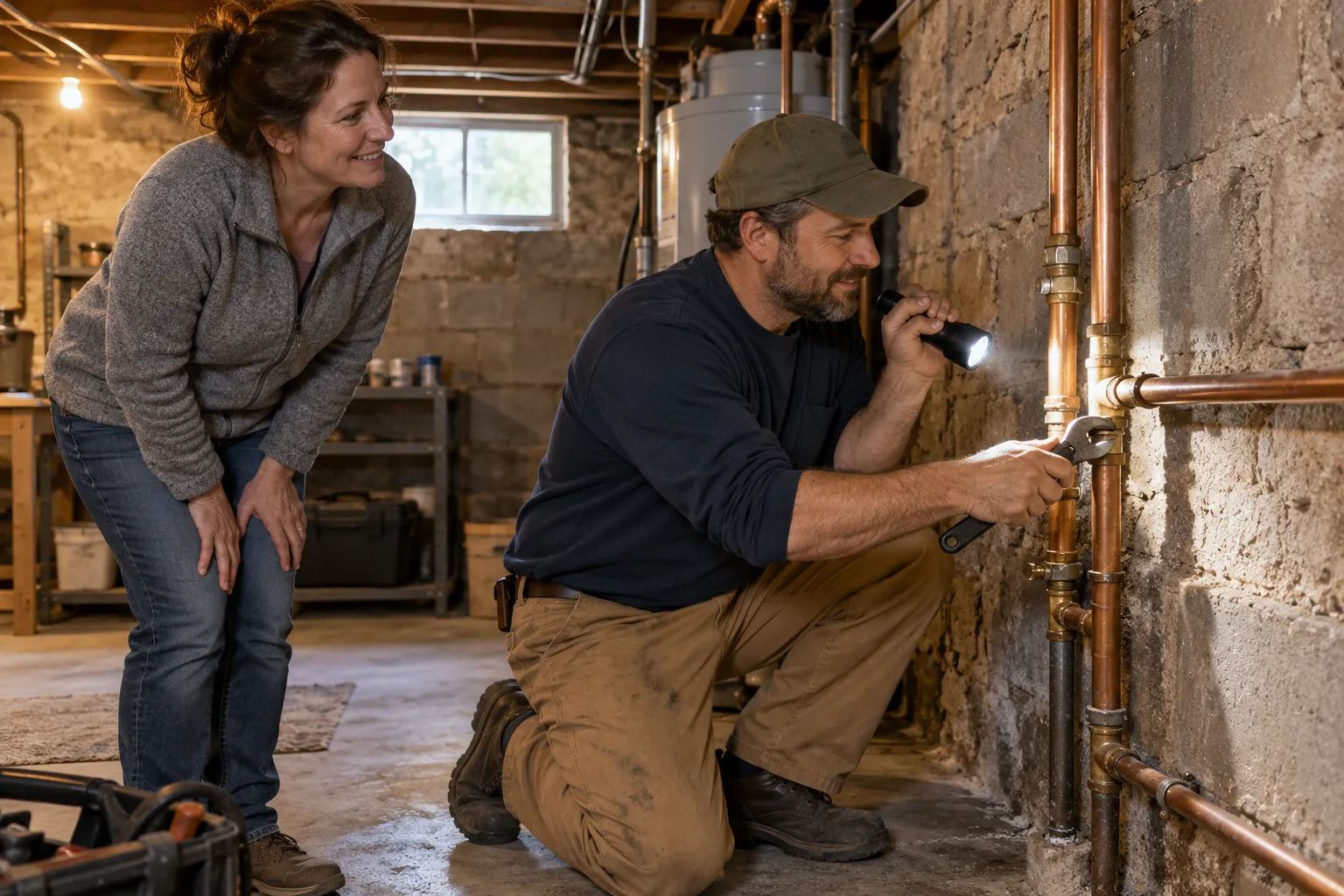
A small drip, a damp wall or a strange gurgle can be the first sign of a bigger plumbing problem. Older homes with stone or block foundations and full basements can hide trouble for a long time. Cold winters and freeze-thaw cycles add more stress to pipes.
Socialgained Plumbing is a referral service. We do not do the work. We connect homeowners in the Shelton area with independent local providers who handle emergency plumbing. This page explains what counts as an emergency, what to do first, what to avoid, and how to choose a careful repair that protects the house and its value.
Plumbing Emergency? Start Here
Stay calm and look at the situation. Your first goal is safety. Your second goal is to limit the water. Repairs come third.
Do this, not that:
- Do shut off the water at the main valve if water is spraying or pooling.
- Do turn off the electricity to a wet area only if you can reach the panel without standing in water.
- Do not walk through standing water near outlets, cords or appliances.
- Do not try to pry open or cut a pipe that is under pressure.
When the water is under control, reach out to a provider. Request a callback to check provider availability in your area.
What Counts as a Plumbing Emergency?
Some problems cannot wait for a regular appointment. Treat these as urgent:
- A burst or cracked pipe with running water
- Water coming through a ceiling or down a wall
- No water at all when the cause is unclear
- A leak at the water heater tank
- Sewage smell or wastewater backing up into fixtures
- A gas smell near a gas water heater
A gas smell is different. Leave the house and call your gas utility or emergency services from outside. Do not flip switches or use a lighter.
A slow drip under a sink is less urgent. Still, it deserves attention soon. Small leaks rot cabinets and floors over time.
Early Warning Signs People Miss
Most big repairs start small. Watch the early signs:
- Water stains that slowly grow on a ceiling or basement wall
- A water bill that jumps with no change in habits
- Pressure that drops in one faucet or the whole house
- Rust-colored water after it sits overnight
- A musty smell in a basement or crawl space
- Pipes that knock, bang or whistle
Write down what you see and when it started. Take photos. A provider can use those notes to find the cause faster.
Why Acting Quickly Matters
Water moves into drywall, insulation, subfloors and wood framing. Damp materials can grow mold. Wet wiring is a safety risk. A leak you handle early may mean a simple pipe repair. A leak left alone may mean opened walls and new flooring.
Many providers can respond quickly, but availability varies. Reach out as soon as you know there is a problem.
Burst and Frozen Pipes
Cold snowy winters and freeze-thaw cycles are hard on plumbing. Pipes along exterior walls, in unheated basements and near old stone or block foundations freeze first. Ice can crack a pipe long before you see water. The leak often shows up when the ice melts.
If a pipe is frozen but not yet burst:
- Do open the faucet slightly and keep the room warm.
- Do shut off the main water if you see a bulge or crack.
- Do not use an open flame, a torch or a propane heater on a pipe.
- Do not leave a hair dryer running unattended on a wet area.
A provider can thaw the line safely and check for hidden splits. Spring snowmelt and coastal storms can bring a different problem, which is water entering through foundation walls. A plumber can help find out whether the water is from a pipe or from outside.
Water Heater Emergencies
A water heater holds a lot of water and, in some cases, a flame. Know the danger signs:
- Water pooling around the base of the tank
- Rumbling, popping or hissing from inside the tank
- Rusty hot water
- A pilot light that keeps going out
For an electric unit, turn off the power at the breaker. For a gas unit, set the control to off if it is safe to reach. Close the cold water supply valve on top of the tank. Do not touch a tank that is hot or leaking heavily.
A leaking tank body usually means replacement. A faulty valve or element may be a smaller repair.
Drain Backups and Overflows
If wastewater is coming up in a tub, floor drain or toilet, stop using water in the house. Do not run the washer or dishwasher. Do not pour chemical drain products into a backed-up line, because they can splash and harm pipes. Providers in our network can also help with emergency drain clearing and blocked pipe services. If the problem points to the main line, ask about a camera inspection.
What an Emergency Plumber Does
A provider starts by making the home safe. That usually means stopping the leak, shutting off valves and checking for damage. Next comes the diagnosis. Then the provider explains the options, gives a written quote and gets your approval before starting repairs.
An emergency fix may be temporary. For example, a section of pipe may be capped or replaced so you have water again. Ask what is permanent and what is not.
Choosing an Emergency Plumber
Stress makes people rush. Take one minute to ask the right questions:
- Is the provider licensed and insured in your state?
- Will you get a written quote before work starts?
- Are parts and labor covered by a written warranty?
- Does the provider explain the cause in plain words?
Be careful if someone demands full payment up front or pushes you to replace everything without showing you the problem. A good provider will show you the damaged part.
Protect the House and Its Value
A careful repair does more than stop a leak. It protects framing, floors and finishes. It also leaves a record. Keep invoices, photos and notes. Buyers and inspectors often ask about past plumbing work, especially in older homes. Clean documentation helps resale.
Some policies may cover sudden damage, so check your policy. Providers can often help document damage for a claim. Take your own photos before anything is moved.
After the Repair
Once the water is off and the pipes are fixed, finish the job:
- Dry out wet areas fast with fans and a dehumidifier.
- Check the repaired spot again after a day or two.
- Ask the provider about worn valves, old supply lines and exposed pipes.
- Label your main shutoff so anyone in the house can find it.
In older homes and multi-family buildings, ask whether other pipes of the same age are near the end of their life. Planning a repair beats facing an emergency.
Ready for an Estimate?
If the situation is stable and you want to compare options, send a request. There is no obligation.
What's Included
Burst Pipes
A provider can locate the split, shut off and repair the damaged section, and check nearby pipes for hidden cracks or wear.
Water Heater Faults
Leaking tanks, failed valves and heating problems can be diagnosed and repaired or replaced safely.
Frozen Pipe Thawing
Safe thawing methods that avoid open flame and reduce the risk of further damage.
Leak Finding and Shutoff
Tracing hidden leaks, replacing faulty shutoff valves and restoring safe water flow to your home.
Typical Emergency Plumbing Costs
Prices vary by home, pipe material, access and the time of the visit. These are typical U.S. ranges, not quotes. Always ask for a written quote before work begins, and ask what it includes.
| Service | Typical range | Notes |
|---|---|---|
| Emergency visit and diagnosis | $100 – $300 | Often applied toward the repair; ask first |
| Burst pipe repair | $150 – $1,000 | Depends on access and pipe type |
| Frozen pipe thawing | $200 – $800 | More if walls must be opened |
| Water heater replacement | $1,000 – $3,500 | Tank or tankless, plus venting needs |
| Shutoff valve replacement | $150 – $500 | Main valves cost more in older homes |
| Urgent-visit surcharge | $50 – $250 | Varies by provider; confirm in writing |
How It Works
Make It Safe
Shut off the water, avoid wet electrical areas, and leave if you smell gas.
Reach Out for Help
Request a callback or send a request to connect with a local provider.
Review the Quote
Ask for a written quote and a plain explanation before work begins.
Keep Your Records
Save photos, invoices and notes to support insurance claims and future resale.
Why Call Socialgained Plumbing
Safety First
Advice here focuses on keeping you safe and limiting damage before any repair begins.
Clear Guidance
Simple do and do not lists help you avoid common mistakes when pipes fail.
Local Providers
Independent providers in our network know local housing, from older basements to winter freeze risks.
Home Value
Careful repairs and good records help protect your home and its future resale.
Other Services
Need emergency plumbing in Shelton?
Tell Socialgained Plumbing what you see, and your request goes to an independent provider in the network. Share the details through the form to get started.
Emergency Plumbing FAQ
What should I do first when a pipe bursts?
Shut off the main water valve right away. Avoid standing water near outlets and cords. Turn off power to the area only if it is safe to reach the panel. Take photos of the damage, then contact a local provider.
Does homeowners insurance cover a burst pipe?
Some policies may cover sudden damage, but coverage differs. Check your policy and ask your insurer. Providers can often help document the damage for a claim, so keep photos and invoices.
How do I know if a plumbing problem is an emergency?
Running water you cannot stop, sewage backing up, a leaking water heater or water coming through a ceiling are urgent. A slow drip is less urgent but should still be fixed soon.
Request a callback
Tell Socialgained Plumbing what you see, and your request goes to an independent provider in the network. Share the details through the form to get started.
No obligation